There are few places that tell the story of a city and its transformation all on their own. Darwin, housed in the former Caserne Niel on the right bank of Bordeaux, is one of them. A military garrison abandoned for years, this seven-acre site has become one of the most remarkable spaces in Europe: an ecosystem where entrepreneurs, artists, skaters, urban farmers and local families coexist. For visitors discovering Bordeaux, Darwin offers a striking contrast to the 18th-century facades of the left bank — a dive into today's Bordeaux, creative, committed and resolutely alive.
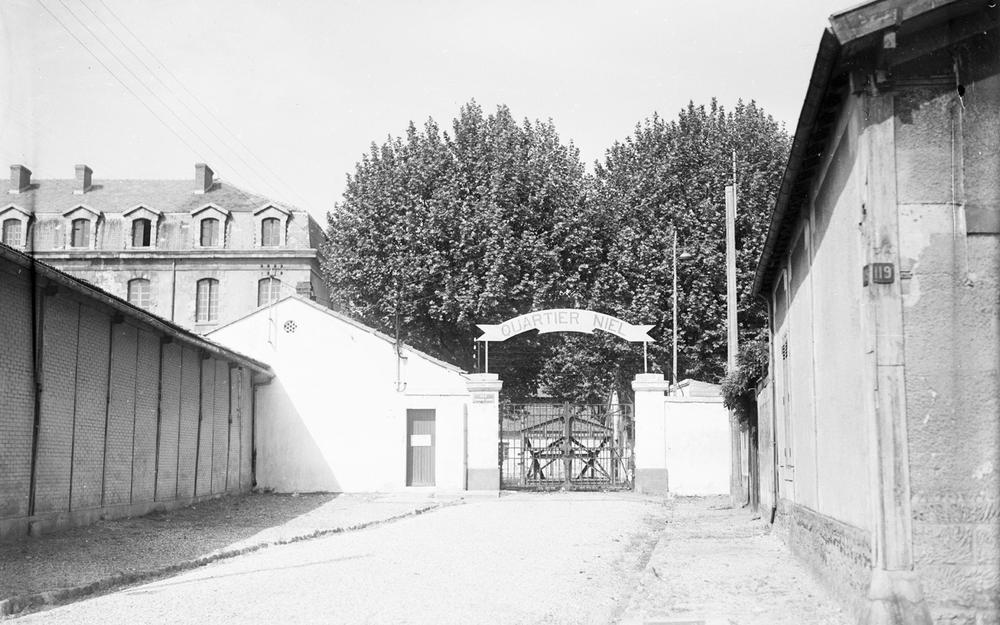 The Caserne Niel in the Bastide neighborhood, April 29, 1949
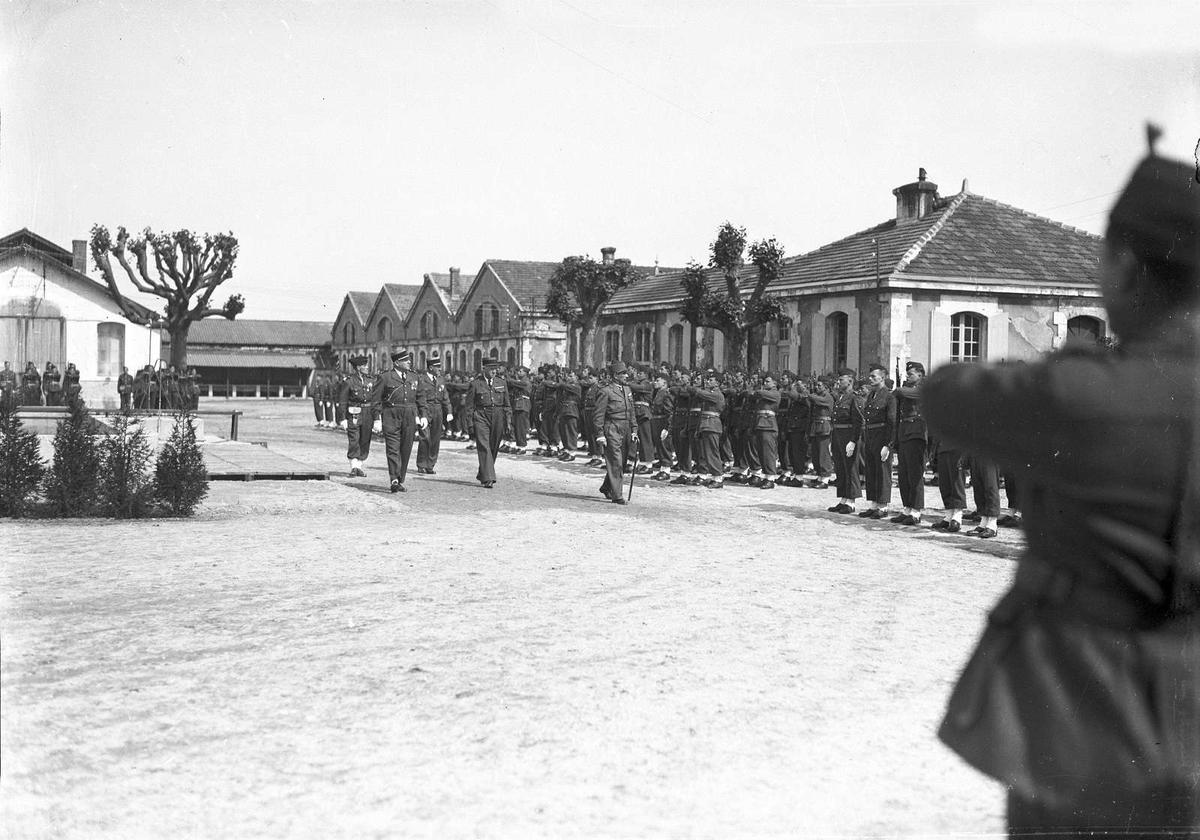 Medal ceremony at Caserne Niel, June 3, 1951
From barracks to wasteland: the military origins of the site
Darwin's history begins long before Darwin itself. It begins with horses, soldiers and warehouses.
In 1874, the French state purchased a vast plot of land on the Queyries docks, on the right bank of the Garonne, from a bankrupt warehouse company — the Magasins Généraux de la Gironde, built around 1850. Two years later, the Caserne Niel was erected to house the 18th military transport squadron. For over a century, these stone and brick buildings would house troops, endure two world wars, and see generations of soldiers pass through.
The La Bastide neighborhood, on this right bank long considered the "wrong side" of Bordeaux, lived to the rhythm of the barracks. The military sustained local shops, cafés and families. The Caserne Niel was a world of its own, with stables, kitchens, clothing stores and mechanics' workshops.
But the world changed. In 2005, the last soldiers left the Caserne Niel, transferred to other sites. The 57th infantry regiment departed, and with it, all the life that once animated these walls. Silence fell over thirty hectares of now-empty buildings.
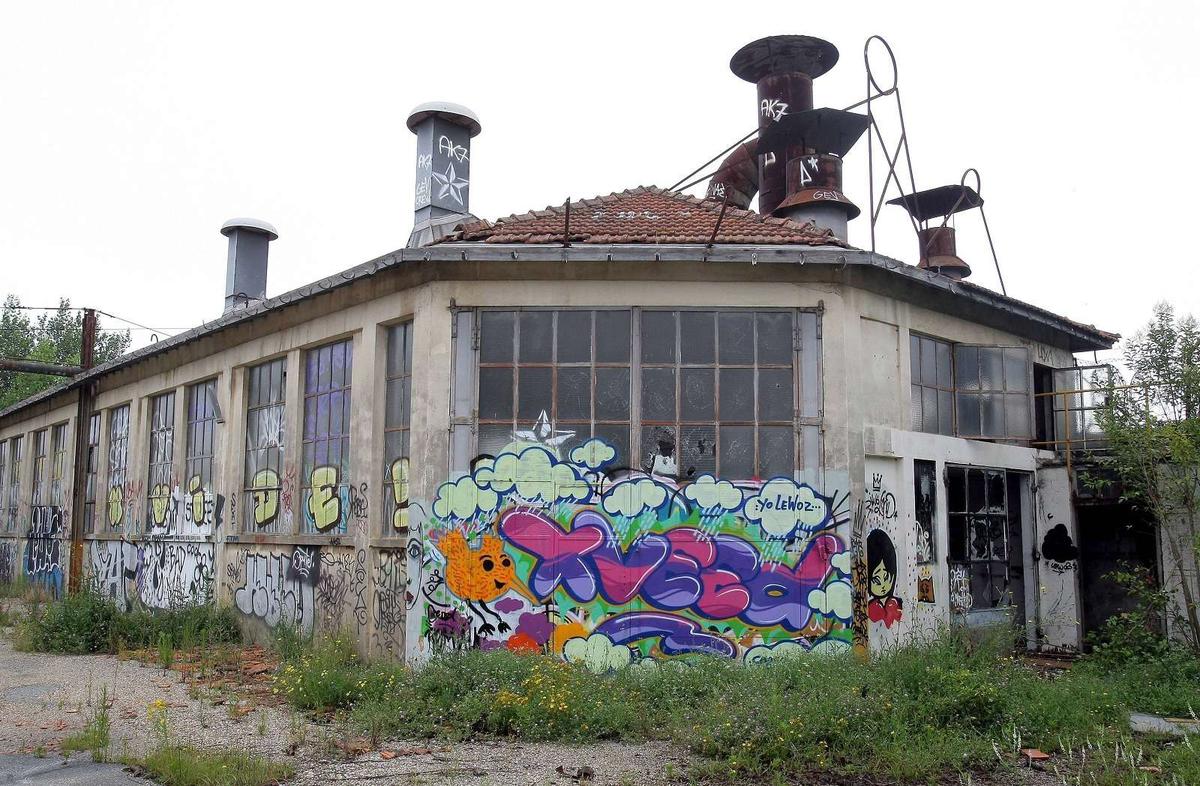
What followed is a classic tale of French military brownfields: buildings crumbled, vegetation invaded the courtyards, roofs collapsed. But the site didn't remain deserted. Squatters moved in, graffiti artists took over the walls, and scavengers salvaged what they could. The Caserne Niel became an urban no man's land, a fascinating and dangerous wasteland at the city's doorstep.
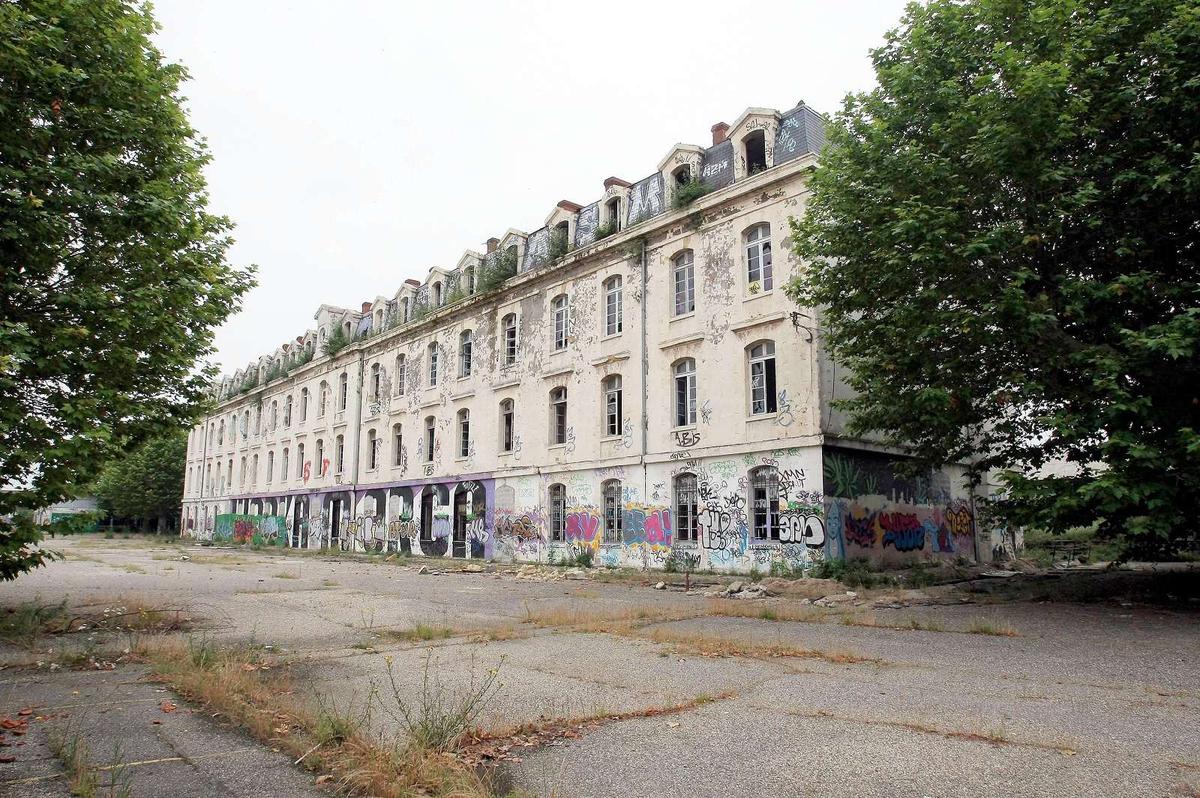 The abandoned Caserne Niel, June 24, 2008
2007-2009: the birth of an extraordinary project
In 2007, the Bordeaux Urban Community (CUB, now Bordeaux Métropole) purchased the military land from the state, along with surrounding railway brownfields. Thirty hectares in total. The authority saw it as a major real estate investment to develop the right bank and rebalance a metropolitan area still heavily focused on the left bank. The ZAC Bastide-Niel development zone was created.
It was in this context that Philippe Barre entered the scene. A Bordeaux entrepreneur and founder of the Évolution group — a project incubator focused on sustainable development — he was looking for a place to implement a new concept: an economic biotope where "green and creative" companies could coexist, cooperate and invent new models together. His eye fell on the Magasins Généraux of the Caserne Niel, these immense 19th-century warehouses abandoned for forty years.
On February 12, 2009, a date chosen to coincide with the bicentenary of Charles Darwin's birth, the project was officially presented. The name choice was deliberate: the English naturalist theorized the adaptation of species to their environment. The message was clear — in a changing world, adapt or perish.
The project attracted as much support as curiosity. It was backed by ADEME, the United Nations Environment Programme (UNEP), and local officials across the political spectrum. In December 2009, the CUB unanimously voted to transfer 10,000 square meters of the North Magasins Généraux to the Évolution group for €1.3 million.
The site was chosen as a pilot for the UN environment program: the first French case for testing an international framework for measuring buildings' climate footprint.
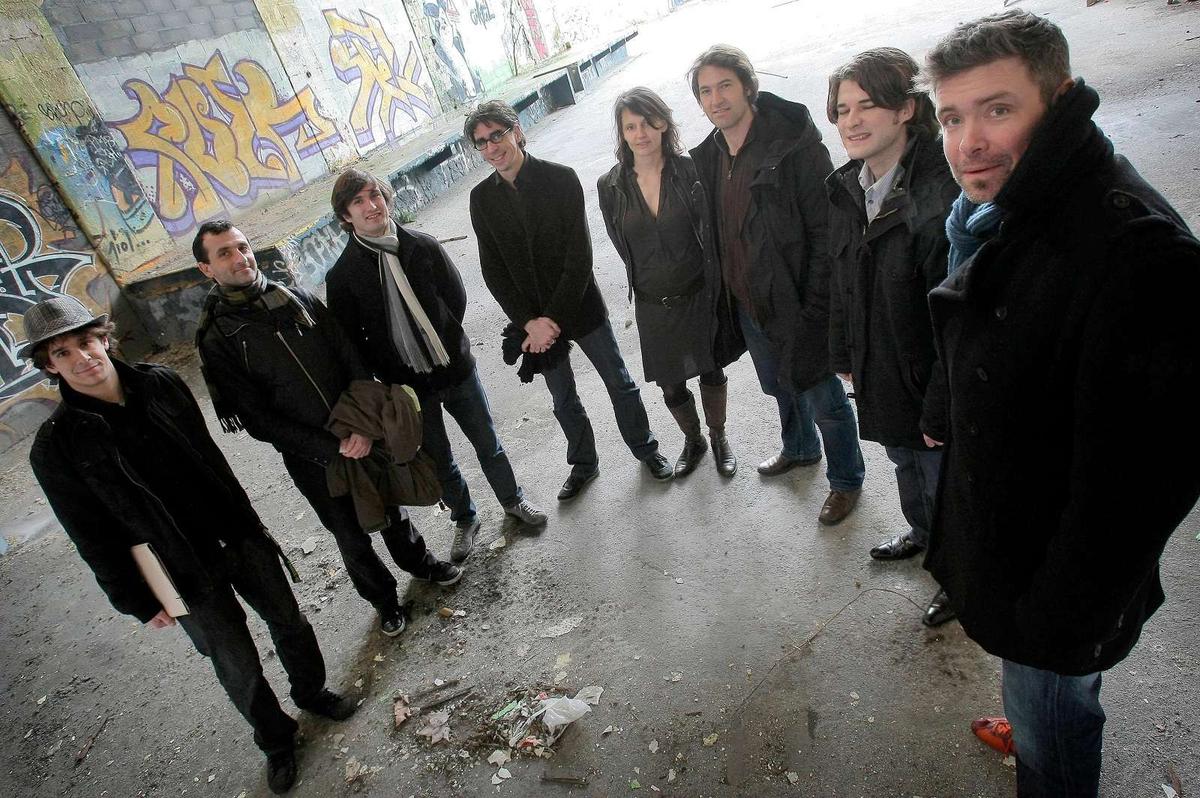 The Darwin project founders, February 12, 2009
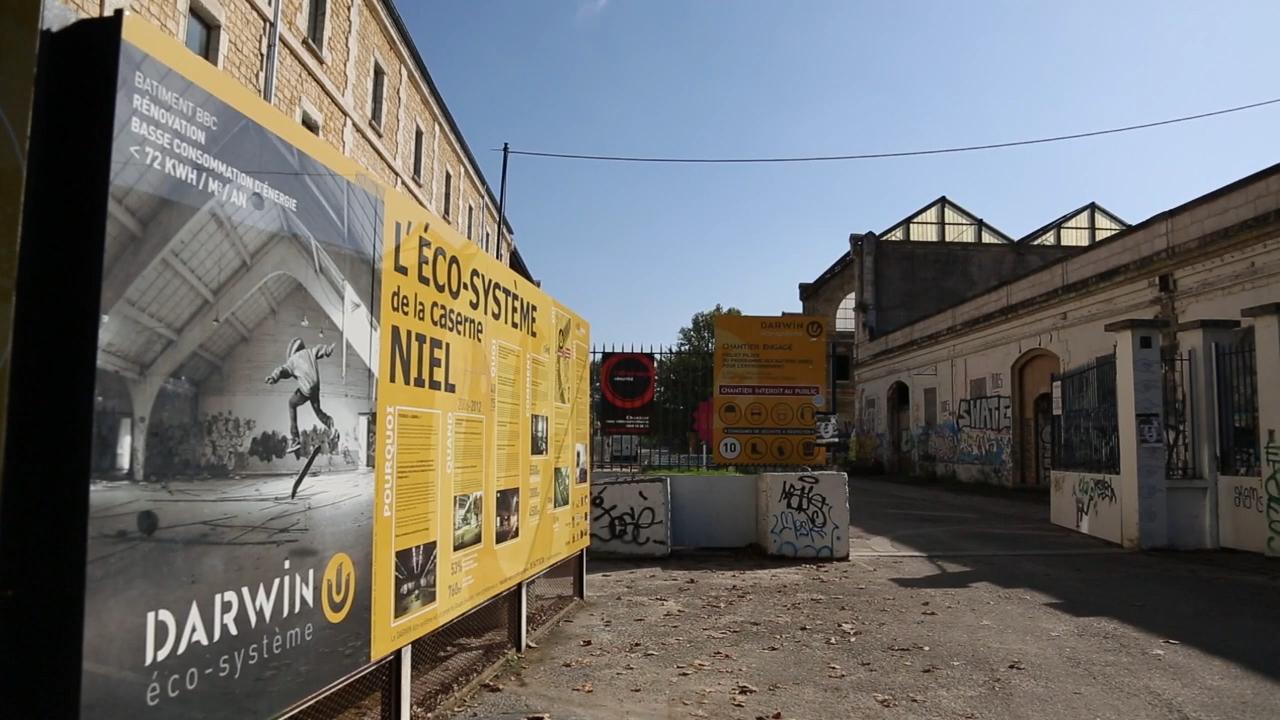 The Caserne Niel transferred to the Darwin project
Rehabilitation: renovate rather than destroy
The construction that began in 2010 embodied the project's philosophy: rehabilitate existing structures rather than raze and rebuild. Architects Olivier Martin and Virginie Gravière were tasked with an ambitious eco-renovation of the Magasins Généraux. The principle: preserve as much of the original construction as possible — exposed stone walls between pillars, warehouse volumes, the overall structure — while achieving low energy consumption standards.
The result was spectacular. The buildings achieved consumption below 83 kWh/m²/year. Photovoltaic panels covered 480 m² of rooftop. Rainwater was collected to supply restrooms. Electricity was 100% supplied by Enercoop, a green and renewable energy provider. A nighttime super-ventilation system and an aeraulic device allowed heat recovery in winter and natural cooling in summer.
The project was honored in 2013 with the UNSFA citizen architecture award, recognizing "collaborative, exemplary approaches demonstrating an effort of co-production."
But Darwin wasn't limited to the renovated Magasins Généraux. Simultaneously, the Darwin Endowment Fund — the ecosystem's nonprofit arm — invested in neighboring hangars, still derelict. In three years, 12,000 m² of abandoned buildings were restored using frugal means, salvaged materials and largely participatory labor. This was the "positive transgression" claimed by the founders: occupy a place, make it come alive in interesting ways, and wait for permits to follow.
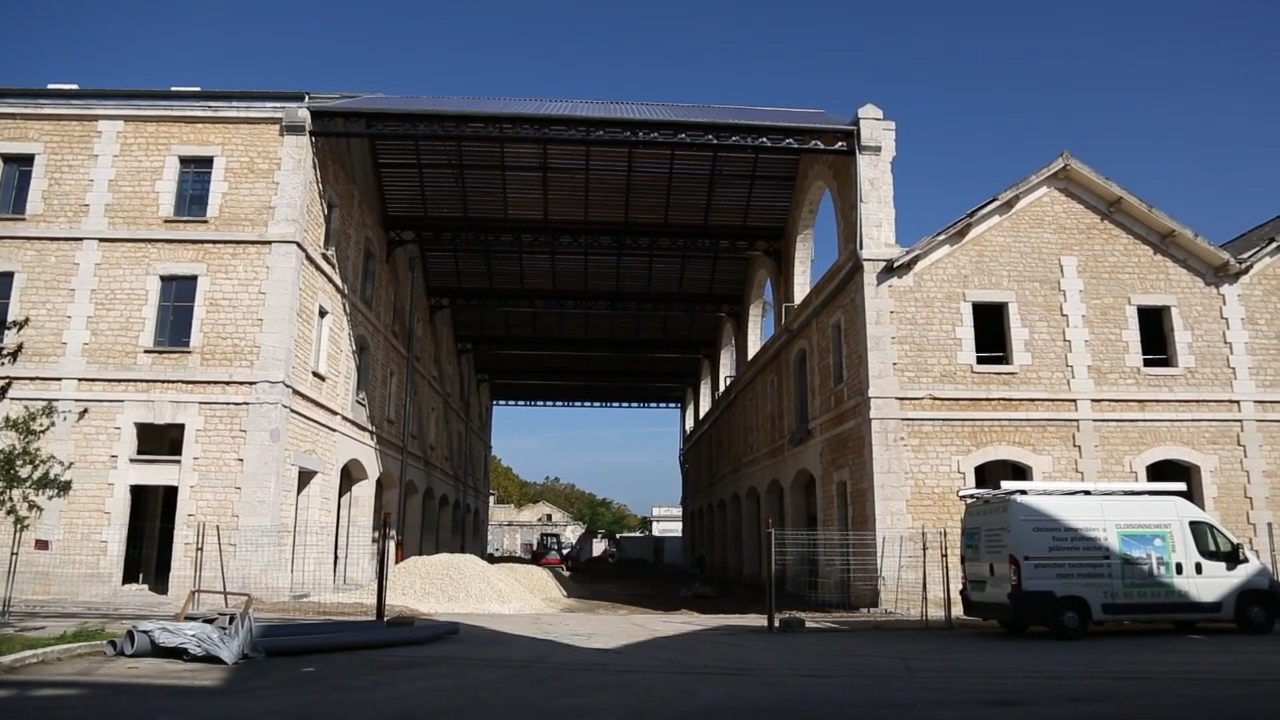 The eco-renovation of the Magasins Généraux
Darwin today: a village within the city
Two decades after the military departed, the Caserne Niel has become a living space without equal in France.
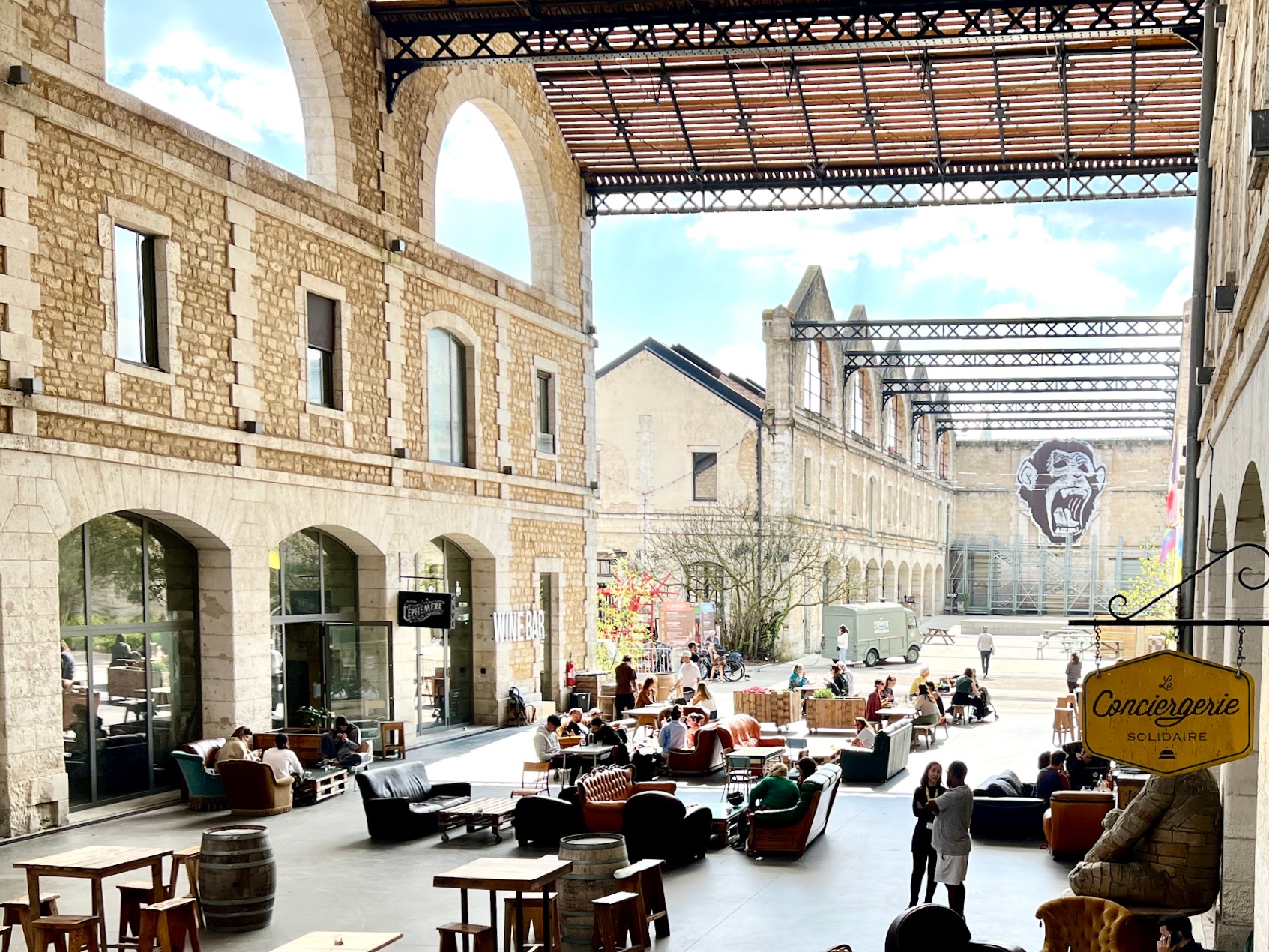
The Magasin Général, the site's gastronomic heart, is a 950 m² bistro-canteen that bills itself as the largest organic restaurant in France. Homemade cuisine, over 90% organic and local ingredients, artisanal pizzas, vegetarian and country dishes. You can drink LALUNE organic beer, brewed on-site at the Chantiers de la Garonne, and coffee roasted just meters away by l'Alchimiste. Sourdough bread comes from the Babel Bread bakery. The place is open seven days a week.
The Hangar Darwin is an indoor skatepark and the pride of the site. Built entirely with salvaged materials from the rehabilitation project — slats, frames, pallets — it proves you can create a quality sports facility for a tenth of the usual cost. Managed by the La Brigade association, it welcomes skaters, BMX riders and roller derby players.
The Bric-à-Brac Emmaüs occupies an 800 m² hangar where you can browse furniture, clothing, dishes and all manner of objects. Circular economy at its most tangible.
The Ferme Niel brings together several urban farming activities: permaculture market gardening, organic poultry farming, beehives and collective composting.
Street art is everywhere. The exterior and interior walls of the barracks are covered with monumental murals, graffiti and tags that make Darwin an open-air museum of urban art.
The Chantiers de la Garonne, facing the Magasins Généraux, revive the tradition of a former shipyard active from 1902 to 1979. Today you'll find the Darwin Beer brewery and the Marins de la Lune nautical club.
And then there's everything else: coworking spaces hosting nearly 200 companies, a business incubator (Le Campement), the Géolibri travel bookshop, a recycling center, bike repair workshops, a vintage motorcycle customization workshop, martial arts dojos, alternative medicine practices, two micro-nurseries, and the VEJA brand's dedicated shoe repair and recycling space.
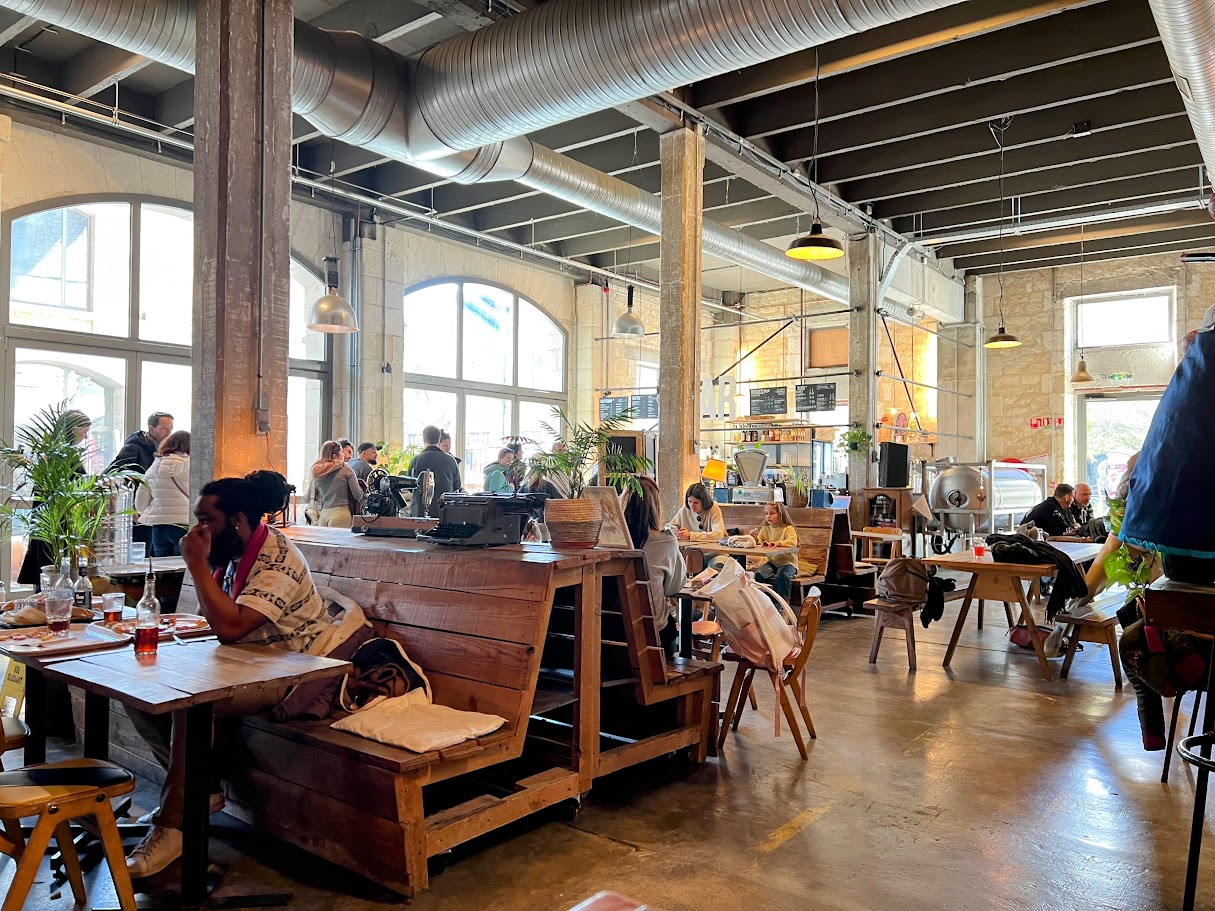 The Magasin Général, Darwin's organic restaurant
 The indoor skatepark at Hangar Darwin
 Street art and murals at Darwin
A laboratory for the city of tomorrow
What sets Darwin apart from a trendy commercial space is its laboratory dimension. The site doesn't just host activities: it experiments, at real scale, with what a city in transition could look like.
Ecologically, the numbers speak for themselves: 80% of waste is recycled through a twenty-category sorting system; drinking water consumption is six times lower than a comparable office building; greenhouse gas emissions per employee are five times below average; 67% of commutes use soft mobility, with nearly half by bicycle.
Economically, Darwin has generated around 500 jobs, 200 of which were created from scratch. Nearly 200 companies and 20 associations are based there. The site attracts over 500,000 visitors per year.
Socially, Darwin has demonstrated its ability to respond to emergencies. During the March 2020 lockdown, the ecosystem transformed into a food logistics platform for the most vulnerable populations in the Bordeaux metropolitan area. Within hours, the site became an emergency distribution hub, collecting over 20 tons of supplies in two weeks.
An iconic place for the right bank
To understand what Darwin represents for Bordeaux, you need to appreciate how far the right bank has come.
For decades, La Bastide was "the other side of the water": a working-class neighborhood connected to the city center only by the Pont de Pierre, built in 1822 on Napoleon's orders. While Bordeaux shone with its classical facades and majestic quays — listed as a UNESCO World Heritage Site in 2007 — the right bank accumulated industrial and railway brownfields.
The arrival of the tramway in 2003, the inauguration of the Chaban-Delmas bridge in 2013, and the vast ZAC Bastide-Niel urban project gradually changed things. But it was Darwin that truly gave this evolving bank a soul and an identity. The place became an urban landmark, the symbol of another way of building a city: through use rather than planning, through experimentation rather than specifications, through community rather than developers.
Why visit Darwin during your stay in Bordeaux
It's free and open. You enter Darwin like you enter a village. No ticket, no line, no set route. Stroll between the buildings, admire the street art murals, sit on the terrace, watch the skaters.
It's authentic. Darwin wasn't designed for tourists. It's a living and working space where 500 people come every day for their jobs, where neighborhood families bring their kids on Wednesdays, where students study at the café.
It's photogenic. The monumental murals, the 19th-century industrial buildings, the graffiti-covered hangars, the view of the Garonne and the Bordeaux quays across the water: every corner is a photo opportunity.
The food is great. The Magasin Général offers quality organic and local cuisine in an extraordinary setting — a former military warehouse turned into a giant canteen.
It's easy to reach. From central Bordeaux, reach Darwin by walking across the Pont de Pierre, taking tram line A to Stalingrad stop, or hopping on the BatCub river shuttle.
Practical information
Address: Darwin Écosystème, 87 quai des Queyries, 33100 Bordeaux
Access: Tram A — Stalingrad stop, then walk along the Garonne on the quai des Queyries (about 10 minutes on foot). Bus, bike (V3 stations nearby), or BatCub river shuttle.
Free entry.
Tip: Darwin is especially pleasant in the late afternoon and evening, when the warm light hits the stone facades and the Magasin Général terrace comes alive.
Crédit photos : Archives Sud Ouest / Alex Leroy